How to Choose a Cast Iron Dosa Tawa: Size, Edge and Handles
A cast iron tawa is a twenty-year purchase. It does not wear out, it has no coating to peel, and the surface gets better with use rather than worse — which means the only way to get it wrong is to buy the wrong shape for the way you actually cook. There are just three decisions: how wide, flat edge or raised edge, and one handle or two. This guide covers them in that order.
Everything in our range is pre-seasoned, so none of these choices is about how much work the pan will be on day one. They are about the dosa you want to make.
Size: 10, 11 or 12 inch
Measure by the plate you serve on, not by the pan that looks impressive. A dosa that overhangs the plate has to be folded twice and arrives at the table soft.
- 10 inch — the everyday home size. It makes a dosa that fits an ordinary dinner plate, heats through in a few minutes, and is light enough to lift one-handed when hot. If this is your first cast iron tawa, buy this one. Both the single-handled 10 inch and the edge-raised 10 inch sit in this class.
- 11 inch — a bigger dosa, still easy to handle. The pre-seasoned 11 inch is the quiet best-of-both: noticeably more surface than a 10 inch, without the jump in weight that comes with a 12. Good for a family that makes dosa often, or anyone who likes a thin dosa spread wide.
- 12 inch — restaurant-style, and heavy. The 12 inch edge-raised and the 12 inch double-handled make the long, paper-thin dosa people photograph. Be honest with yourself about the weight: a 12 inch cast iron tawa full of heat is a two-handed object, and if the person cooking has a wrist or shoulder problem it will quietly stop being used. If you are not sure, ask us for the weight before you order.
One practical limit people forget: the tawa must fit your burner and your storage. A 12 inch pan on a small burner heats in the middle and stays cool at the rim, which is exactly the problem cast iron is supposed to solve. Match the pan to the biggest burner you will actually use.
Edge: flat or raised
This is the decision most people do not know they are making, and it changes what the pan is good at more than the size does.
- Flat edge. The surface runs right out to the rim, so you can spread batter to the full width and slide a spatula under from any direction. This is the classic dosa tawa: best for thin, crisp dosa and for anyone who wants the largest usable surface for a given diameter.
- Raised edge. A low lip around the rim keeps oil and loose batter from running off. That matters for uthappam, egg dosa, onion dosa and anything where you pour oil around the edge and want it to stay there. It also makes the pan easier to carry without dripping. The trade-off is a slightly smaller flat cooking area and a lip your spatula has to clear.
If you make mostly plain and masala dosa, buy flat. If your household eats as much uthappam and egg dosa as it does dosa, buy raised. If you genuinely do both in volume, the raised edge is the more forgiving of the two — a thin dosa still works on it, while oil on a flat tawa runs onto the stove.
Handles: one or two
- Single handle. Lift and tilt with one hand while the other works the ladle. This is what most people are used to, and on a 10 or 11 inch pan it is the better choice.
- Double handle. Two short lugs instead of one long arm. It takes two hands, but it balances a heavy pan properly, takes up far less space in a cupboard, and is much safer to move when full. On a 12 inch pan it is the sensible option — see the 12 inch double-handled and the edge-raised double-handled 10 inch.
Remember that a cast iron handle gets as hot as the pan. Whichever you choose, a dry cloth or a thick mitt lives beside the stove permanently.
Home kitchen or tiffin shop?
For a home, one 10 or 11 inch tawa covers almost everything, and the edge is the only real decision.
For a tiffin shop or small hotel, buy two of the same size rather than one of each. Two pans on two burners roughly doubles throughput at breakfast, and when one needs wiping down the service does not stop. Matching sizes also means one spare lid, one spatula and one habit rather than two. A commercial kitchen that also makes idli should read the tiffin shop equipment checklist, because the tawa is rarely the thing that limits how many customers you serve.
Gas, induction and electric
Cast iron is iron, so it works on an induction hob — that is what induction needs. The requirement is a flat base in full contact with the plate, which every tawa here has. On gas it simply works, and a cast iron pan is far more tolerant of an uneven flame than a thin one because it spreads the heat itself.
The one habit to change for cast iron on any heat source: preheat slowly on medium for four or five minutes rather than blasting it on high. Cast iron holds heat superbly but moves it slowly, so a fast preheat gives you a scorching centre and a cold rim. Give it time and the whole surface is even.
What to check when it arrives
- Sit it on a flat surface. It should not rock. A slight wobble on a cast surface is normal; a visible rock is not.
- Run a hand over the cooking face. Smooth-finished pans like ours should feel even, not gritty. A fine texture is the casting, not a fault.
- Look at the colour. Pre-seasoned cast iron arrives dark grey to black and slightly dull. A patchy brown film is normal and evens out with use.
- Check the handle joint. It is cast as one piece with the pan on these, so there is nothing to work loose — but confirm there is no crack line.
- Do not store it in the plastic it shipped in. Trapped moisture is the one thing that will rust a new pan before you have cooked on it.
Once it is in the kitchen, the seasoning and care guide covers the first cook, daily cleaning and what to do if a pan ever does rust.
Frequently asked questions
Should I buy a flat or a raised edge dosa tawa?
Flat if you mostly make plain and masala dosa: the surface runs to the rim, so you can spread wide and slide a spatula under from any direction. Raised if uthappam, egg dosa and onion dosa are regulars, because the lip keeps oil and loose batter from running onto the stove. If you genuinely do both, raised is the more forgiving of the two, since a thin dosa still works on it.
Is a double-handled tawa better than a single handle?
It depends entirely on size. On a 10 or 11 inch pan a single handle is better, because you can lift and tilt with one hand while the other works the ladle. On a 12 inch pan, two handles balance the weight properly, store in far less space and are much safer to move when the pan is hot and full. Either way the handle gets as hot as the pan, so a thick cloth lives beside the stove.
Can I use a cast iron dosa tawa on an induction stove?
Yes. Induction needs a ferrous base in full contact with the plate, and cast iron is iron, so every flat-based tawa here works on induction as well as on gas. The habit to change is the preheat: bring it up on a medium setting for four or five minutes rather than starting on full power, because cast iron holds heat superbly but moves it slowly, and a fast preheat gives a hot centre with a cold rim.
How many dosa tawas does a tiffin shop need?
At least two, and two of the same size rather than one of each. Two pans on two burners roughly doubles what you can put out during the breakfast rush, and when one needs wiping down the service does not stop. Matching sizes also means one spare spatula and one routine instead of two.
Why does the first dosa always stick?
Because the pan is not yet at an even temperature and the surface is dry. The traditional fix works: heat the tawa, rub it with half a raw onion dipped in oil, then wipe it. It cleans the surface, seasons it lightly and lets the first dosa release. Test the heat by flicking a few drops of water on the pan, which should skitter and vanish in a second or two rather than sitting and boiling.
Ready to choose?
For most homes: 10 inch, single handled if you make plain and masala dosa, or the 10 inch edge-raised if uthappam is a regular. For a shop, two 12 inch double-handled pans.
If you are still unsure, tell us what you cook most and how many people you cook for, and we will tell you which one fits — including when the smaller pan is the right answer.
See every dosa tawa How to season and care for it
The tawas in this guide
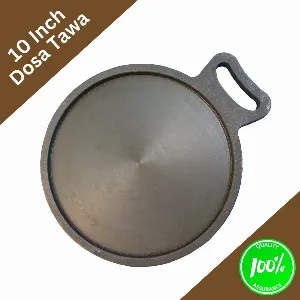 Cast Iron Dosa Tawa - Single Handled 10 Inch
$9.52
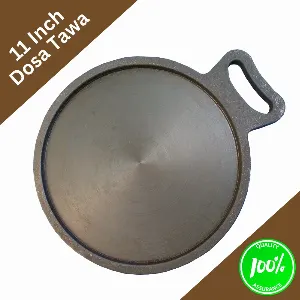 Cast Iron Dosa Tawa - Pre-Seasoned 11 Inch
$10.33
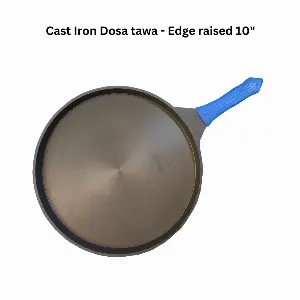 Cast Iron Dosa Tawa - Edge Raised 10 Inch
$12.81
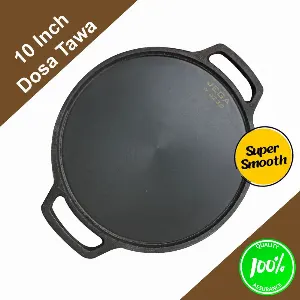 Cast Iron Dosa Tawa - Edge Raised Double Handled 10 Inch
$10.22
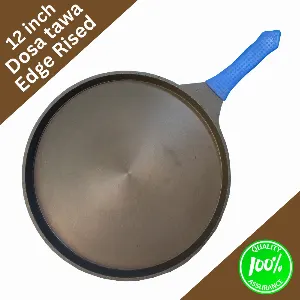 12 inch Cast Iron Dosa Tawa-edge raised Pre Seasoned Super Smooth Finish
$13.45
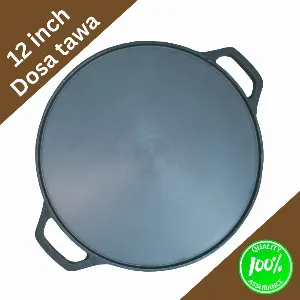 Cast Iron Dosa Tawa - Double Handled 12 Inch
$11.30