How to Choose a Commercial Wet Grinder (5 to 20 Litre)
The wet grinder is the machine a South Indian kitchen is actually built around. Nothing else decides so directly how many customers you can serve: if the batter is not ground and fermented by the time you open, no amount of staff or stove space makes up for it. It is also the machine most often bought one size too small, because people choose by price and then discover they are running three batches every evening instead of one.
This guide covers the four things that matter — drum size, motor rating, tilting, and the timer — and how to size the machine against your own batter, not against somebody's seat count.
Size by your largest single batch, not your daily total
The litre figure on a wet grinder is the capacity of one batch. The mistake is to add up a whole day's batter, find a machine with that number on it, and assume one run will do — or the reverse, to buy small because "we only need ten litres a day" and then grind four times.
The practical rule: measure the biggest single batch you ever need in one go, and buy a drum about one and a half times that. A drum filled to the brim splashes, grinds unevenly and makes a mess of the stand; the same drum at two-thirds full grinds cleanly and pours without spilling.
Then check the arithmetic against your morning. If your batter has to be ready by a fixed hour, count backwards: grinding time per batch, plus fermentation overnight, plus the cleaning between batches. Two batches is a normal working pattern. Four is a sign the machine is too small, and it will cost you in labour every single day. Tell us how much rice you soak and the hour the batter has to be ready, and we will give you the grinding time and the batch count for each size rather than leave you to estimate it.
The range, and who each size is for
Every Vtech grinder below is a tilting machine with a timer, a copper motor and a food-grade stainless steel drum. What changes across the range is drum size and motor power — and the two move together for a reason, explained in the next section.
- 5 litre, 0.5 HP — small tiffin centre or a home-scale business. The Vtech 5 Litre Commercial Tilting Wet Grinder suits a stall or a household business doing modest daily volume. It is the right answer when the alternative is a domestic table-top grinder being run far harder than it was built for.
- 7 litre, 1 HP — a busy tiffin shop. The 7 litre is where the motor doubles while the drum grows only slightly, which makes it noticeably more comfortable under load than the 5. A good first proper commercial machine.
- 10 litre, 1 HP — a small hotel or a shop with steady breakfast trade. The 10 litre is the most common size in the range for a reason: it covers most single-outlet kitchens in one or two batches.
- 15 litre, 1.5 HP — a hotel kitchen or catering operation. The 15 litre is the point at which tilting stops being a convenience and becomes the only sensible way to empty the drum.
- 20 litre, 2 HP — large hotels, canteens and caterers. The 20 litre runs a 2 HP copper motor, a heavy-duty food-grade stainless drum and an A-type stand. At this size you are buying the ability to do the whole night's batter in one run.
- Beyond batter. If you are grinding masala, spices and grain in production quantities rather than idli and dosa batter, look at the Multigrind Industrial Grinding Machine instead. A wet grinder is built for wet batter; it is not the efficient tool for dry grinding.
Why the motor matters more than the litres
Two machines with the same drum and different motors are not the same machine. The drum tells you how much batter fits. The motor tells you whether it will still be grinding properly in year three.
A motor that is undersized for its load does not fail dramatically — it runs hot, and heat is what kills windings. You will notice it first as a machine that takes longer than it used to for the same batch, then as a belt that needs replacing more often, then as a rewinding bill. This is why the range steps up in power as the drum grows: 0.5 HP at 5 litres, 1 HP at 7 and 10, 1.5 HP at 15, and 2 HP at 20.
Copper windings, not aluminium. Copper conducts better, runs cooler and tolerates the long daily duty cycle a commercial kitchen imposes. Aluminium-wound motors are cheaper to make and are a common way to hit a lower price on an otherwise identical-looking machine. Every Vtech grinder here uses a copper motor — when comparing quotes elsewhere, ask the question directly, because it is rarely volunteered.
Tilting drums and timers: what they are actually worth
Tilting means the drum pivots so you pour the batter out rather than scooping or lifting it. On a 5 litre machine that is a convenience. On a 15 or 20 litre machine it is the difference between one person finishing the job and two people lifting something heavy, hot and slippery at five in the morning. It also makes rinsing the drum between batches quick, which is what decides whether staff actually clean it properly when they are in a hurry.
The timer does two jobs. It frees the person who would otherwise stand and watch — in a kitchen where one pair of hands is doing three things before service, that is real money. And it makes the batter consistent, because the grind stops at the same point every time instead of whenever somebody remembers. Over- grinding is a genuine problem: the longer the stones run, the warmer the batter gets, and warm batter ferments differently from batter that went into the vessel cool.
Fermentation, heat, and the thing nobody tells you
A wet grinder heats what it grinds. In Coimbatore in summer that matters: batter that comes out of the drum already warm will over-ferment overnight and be sour by morning. Three habits fix it, and none of them costs anything:
- Grind in the cooler part of the day — late evening rather than afternoon.
- Do not overfill. A drum packed to the top takes longer, and longer means warmer.
- Watch the batch, not the clock, in hot weather. The same timer setting that gives perfect batter in December can be thirty seconds too long in May.
If your kitchen runs hot and the batter is still going sour, ask us before you change anything else — the fix is usually in how the machine is being run, not in the machine.
Installing it properly
- Level floor, bolted stand. A grinder that walks across the floor under load will eventually damage its own mounting. The A-type stand is designed to be fixed down, so fix it down.
- Drainage within reach. You will rinse this machine several times a day. If the nearest drain is across the kitchen, it will get rinsed less often than it should.
- Check the supply before delivery, not after. Confirm the motor rating against your connection and your existing load — a kitchen already running close to its limit will trip when a 2 HP motor starts. If your supply is three phase, say so when you enquire and we will confirm what is available for the size you want.
- Leave room to tilt. The drum needs clearance in front and a vessel underneath. Measure that space before the machine arrives.
Daily care that decides how long it lasts
- Never run it dry. Stones grinding against each other with nothing between them wear fast and can crack.
- Rinse immediately after emptying. Batter left to dry on the stones sets hard and has to be chipped off, which damages the surface.
- Never store batter in the drum. It is a grinding vessel, not a container, and acidic fermented batter standing for hours is hard on it.
- Check the belt monthly. A slipping belt feels like a weak motor and costs a fraction as much to fix.
- Listen to it. A machine that labours on a load it used to take easily is telling you something — belt, stone wear or an overloaded drum. All three are cheap now and expensive later.
- Keep the motor housing dry. Wipe it; never hose it. Water driven into a winding is the most common way these machines die, and it is not a warranty matter.
Frequently asked questions
What size wet grinder do I need for a tiffin shop?
Size it by the largest single batch you need in one go, not by your daily total, and buy a drum about one and a half times that. A drum filled to the brim splashes and grinds unevenly, while the same drum at two thirds full grinds cleanly. Most single-outlet tiffin shops and small hotels land on the 10 litre. Two batches a day is a normal working pattern; four means the machine is too small and it will cost you in labour every day.
What is the difference between a tilting and a non-tilting wet grinder?
A tilting drum pivots so you pour the batter out instead of scooping or lifting it. On a 5 litre machine that is a convenience; at 15 or 20 litres it is the difference between one person finishing the job and two people lifting something heavy, hot and slippery early in the morning. It also makes rinsing between batches quick, which decides whether staff clean it properly when busy.
Why does a copper motor matter in a wet grinder?
Copper conducts better than aluminium, so the motor runs cooler, and heat is what kills windings under a long daily duty cycle. An undersized or aluminium-wound motor rarely fails dramatically. It shows up as batches that take longer than they used to, then belts replaced more often, then a rewinding bill. Aluminium windings are a common way to reach a lower price on an otherwise identical machine, so ask the question directly when comparing quotes.
Can a commercial wet grinder be used for masala and spices?
It can handle wet masala pastes, which is part of what it is for. It is not the efficient tool for dry grinding grain or spices in production quantities, because a wet grinder is built around stones working through a wet mixture. For that volume of dry work an industrial grinding machine is the right machine.
Why does my batter turn sour by the morning?
Usually because it came out of the drum warm. Grinding generates heat, and batter that starts warm over-ferments overnight. Grind in the cooler part of the day, do not overfill the drum, and remember that the timer setting which gives perfect batter in December can be half a minute too long in May. Watch the batch rather than the clock in hot weather.
Ready to choose?
Most single-outlet tiffin shops and small hotels land on the 10 litre. Go up to 15 or 20 litres if you want the whole night's batter in one run, and down to 5 or 7 if you are starting out and would rather not tie up the money.
If you are not sure, tell us how many kilos of rice you soak on a normal day and what time the batter has to be ready. That is enough for us to tell you which size fits — including when the smaller one is the right answer.
Compare every wet grinder What else does a tiffin shop need?
The grinders in this guide
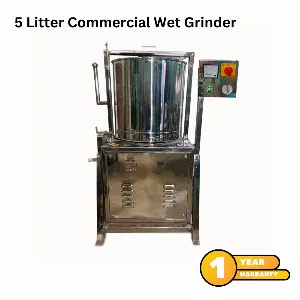 Vtech 5 Litre Commercial Tilting Wet Grinder with timer
$322.86
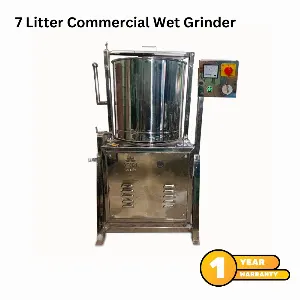 Vtech 7 Litre Commercial tilting wet grinder with timer
$344.38
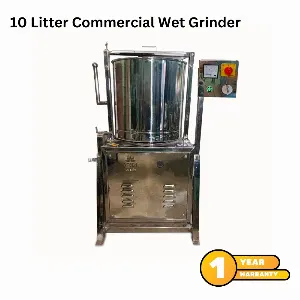 Vtech 10 Litre Commercial tilting wet grinder with timer
$425.10
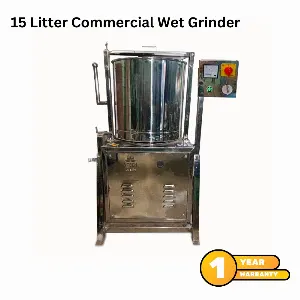 Vtech 15 Litre Commercial tilting wet grinder with timer
$452.00
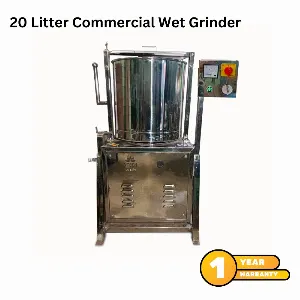 Vtech 20 Litre Commercial tilting wet grinder with timer
$516.58