How to Season Cast Iron Cookware and Keep It Non-Stick
Cast iron has a reputation for being difficult that it does not deserve. Almost every bad experience comes down to one of three things: the pan was put away wet, it was heated too fast, or somebody tried to build the surface with a thick coat of oil instead of a thin one. Get those three right and the pan looks after itself.
Everything we sell arrives pre-seasoned and ready to cook on, so none of this is work you must do before the first dosa. It is what makes the difference between a pan that is fine and a pan that is genuinely non-stick after a month.
What seasoning actually is
Seasoning is not a coating, a chemical, or anything sprayed on. It is oil that has been heated until it stops being oil. Past its smoke point the oil breaks down and bonds to the iron as a hard, dry, plastic-like layer. That layer is what food slides off, and it is part of the metal rather than sitting on top of it — which is why it cannot peel the way a non-stick coating does, and why a scratch repairs itself the next time you cook.
Two consequences follow, and they explain most of the advice below:
- Thin layers only. Oil that is too thick does not fully polymerise. It stays tacky, goes brown and flakes off in patches later. More oil is not more seasoning — it is worse seasoning.
- Heat is what sets it. Oiling a cold pan and putting it away does nothing except leave oil on it, which will eventually go rancid. Oil plus heat is seasoning. Oil alone is just oil.
The method, step by step
- Wash and dry. Warm water and a coir scrub or stiff brush. Dry with a cloth, then put it on a low flame for a minute until no moisture is left anywhere, including the handle and the underside.
- Oil it, then wipe it off. Rub a small amount of oil over the whole pan — cooking face, sides, base, handle. Then take a clean dry cloth and wipe it as though you are trying to remove all of it. What is left behind is the right amount. This step is the one people get wrong.
- Heat until it just smokes. On a medium flame, bring the pan up until you see the first wisp of smoke, then hold it there for a few minutes. Keep the kitchen ventilated — some smoke is the process working, not a mistake.
- Let it cool fully. On the stove, off the heat. Do not rush it with water.
- Repeat two or three times. Several thin layers beat one thick one every time. After three rounds a new pan looks visibly darker and more even.
Which oil to use
You want a high smoke point and a neutral character. In an Indian kitchen the practical choices are refined groundnut oil, rice bran oil, sunflower oil or refined gingelly (sesame) oil. All four are common, cheap and work well.
Coconut oil works too and is traditional in much of the South, but its smoke point is lower, so keep the flame moderate. Ghee and butter are for cooking, not for seasoning — the milk solids burn rather than polymerise and leave a sticky deposit. Flaxseed oil is widely recommended online for its hard finish; it also chips off in flakes more readily than the oils above, and it is expensive, so we do not suggest it.
The first two weeks
A new pan's surface is built by what you cook on it, and some foods build it faster.
- Cook with oil early and often. Dosa with a generous drizzle, poori, onions fried in oil, anything shallow-fried. Each of these is a seasoning round that also feeds you.
- Hold off on sour food for a few weeks. Tamarind, tomato, lemon and vinegar are acidic, and on a young surface they strip seasoning faster than it builds. Once the pan is properly black, sambar and tomato are fine in normal cooking — just do not leave them standing in the pan afterwards.
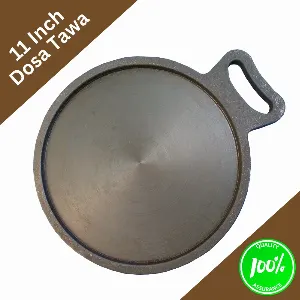
- The dosa trick that works. Before the first dosa of a session, heat the tawa, rub it with half a raw onion dipped in oil, then wipe. It seasons lightly, cleans the surface and stops the first dosa sticking — which otherwise it always does.
- Test the heat before you pour. Flick a few drops of water on the tawa. They should skitter and evaporate in a second or two. If they sit and boil it is too cool; if they vanish instantly it is too hot.
Cleaning, every day
- Clean it while it is still warm, not cold and not scorching. Warm food residue lifts with almost no effort; cold residue needs scrubbing that takes seasoning with it.
- Hot water and a coir scrub or stiff brush. For stuck-on residue, a spoon of coarse salt as an abrasive with a little oil works better than any detergent and takes nothing off.
- No long soaking, ever. This is the single most common way a good pan is ruined. Standing water rusts iron in hours.
- Dry on the flame for a minute. A cloth is not enough — iron holds moisture in the casting's texture. The flame is what makes it properly dry.
- A few drops of oil, wiped thin. Then put it away.
On soap: the old rule that soap destroys seasoning comes from an era when soap contained lye, which genuinely did strip it. Modern dish liquid does not — a little, with a brush, on a well-seasoned pan is fine, and it is better than leaving fish or garlic behind. What does damage seasoning is a harsh detergent combined with hard scouring, or a dishwasher, which combines detergent, heat and a long wet cycle. Never put cast iron in a dishwasher.
Storing it
- Fully dry, with a thin film of oil, in a dry cupboard.
- Not sealed in plastic. Trapped humidity is what rusts a pan that was never used.
- If you stack pans, put a sheet of paper or cloth between them so the surfaces do not rub.
- If the kitchen is damp or the pan will sit unused for months, oil it a little more heavily and check it every few weeks.
Rust: how to bring a pan back
A rusted cast iron pan is not ruined. Unlike a scratched non-stick pan, which is finished, cast iron can be taken back to bare metal and started again — even after years in a loft. The process is tedious, not difficult.
- Scrub the rust off. Steel wool, a wire brush or coarse salt with a little oil. Keep going until you see grey metal with no orange left. Light surface rust takes minutes; heavy rust takes a while and some arm.
- Wash thoroughly with hot water and a little detergent — at this stage there is no seasoning left to protect, so it does not matter.
- Dry immediately and completely on the flame. Bare iron will start rusting again within the hour if you leave it wet.
- Season it from scratch — the five steps above, three or four rounds rather than two.
- Cook something oily on it straight away. Fried onions or poori.
If the rust is only a few orange specks after one careless night, you do not need any of that: scrub the spots, dry on the flame, oil, heat, done.
The one thing that genuinely cannot be repaired is a crack, and cracks come almost entirely from thermal shock — cold water into a hot pan, or a hot pan onto a wet surface. Let it cool before it meets water.
Five things that quietly ruin cast iron
- Soaking it in the sink. The number one cause of rust.
- Putting it away damp. The number two cause.
- A dishwasher. Detergent, heat and a long wet cycle.
- Cold water into a hot pan. Risks warping or cracking.
- Heating an empty pan on high for a long time. Burns the seasoning off and can warp a thin casting. Preheat on medium.
Frequently asked questions
How often should I season a cast iron pan?
Far less often than most people think. A pan used regularly for cooking with oil seasons itself every time it is used, and needs a deliberate round only when the surface starts looking dull or grey rather than dark and slightly glossy. Season properly after scrubbing off rust, after cooking something very acidic, or if the pan has been stored unused for months.
Can I use soap on cast iron?
A little modern dish liquid with a brush does no harm to a well-seasoned pan. The old rule comes from an era when soap contained lye, which genuinely did strip seasoning. What still damages it is harsh detergent combined with hard scouring, long soaking, or a dishwasher, which puts detergent, heat and a long wet cycle together. Never put cast iron in a dishwasher.
Which oil is best for seasoning cast iron?
Any neutral oil with a high smoke point. Refined groundnut, rice bran, sunflower and refined gingelly oil all work well and are easy to find. Coconut oil is fine on a moderate flame but has a lower smoke point. Avoid ghee and butter, whose milk solids burn rather than bond. Flaxseed oil is often recommended online, but it chips off in flakes more readily and costs more.
My cast iron pan has rusted. Can it be saved?
Almost always, and that is the advantage cast iron has over a coated pan. Scrub the rust back to grey metal with steel wool or coarse salt and oil, wash it with hot water, dry it immediately on the flame, then season it from scratch three or four times and cook something oily on it. A few orange specks need only a scrub, a dry and a single round. The one fault that cannot be repaired is a crack, which usually comes from cold water meeting a hot pan.
Why is my cast iron pan sticky after seasoning?
Too much oil. Oil laid on thickly cannot fully polymerise, so it stays tacky, turns brown and flakes later. The fix is to wipe the pan as though you are trying to remove all the oil before heating it, so only a trace is left, and to build the surface in several thin rounds rather than one heavy one. A pan that is already sticky can be scrubbed back and redone.
Looking for a pan?
Everything in our cast iron range is pre-seasoned before it is packed, so it is ready to cook on the day it arrives. If you are choosing a tawa, the dosa tawa buying guide covers size, edge and handles.
See the cast iron range Which dosa tawa should I buy?